A flooded basement is one of the most stressful emergencies a Toronto homeowner can face. Water is actively destroying your belongings, your structure, and your peace of mind and the decisions you make in the first 60 minutes can mean the difference between a manageable repair and a total loss.
This guide walks you through exactly what to do, in order, from the moment you discover standing water in your basement.
Step-by-Step: Your First 60 Minutes
Cut the Power to the Affected Area
Go to your main electrical panel (usually on the ground floor or outside) and switch off the breaker for the basement. If your panel is in the basement and you can't access it safely, call Toronto Hydro at (437) 523-9015 or your local utility to shut off power to your home.
Stop the Water Source if Possible
If the flooding is from a burst pipe, locate your main water shutoff valve (usually near the front foundation wall or where the water line enters) and turn it clockwise to close it. If flooding is from external sources (rain, sewer), skip this step and call for help immediately.
Call a Restoration Company | Don't Wait
This is the most important step. Mould begins growing within 24–48 hours of water exposure. Every hour you wait increases structural damage and the cost of restoration. Call IntelliHomes at (437) 523-9015 we're on-site anywhere in Toronto within 90 minutes.
Document Everything for Your Insurance Claim
Before touching anything, take photos and video of all affected areas. Capture water depth markers, damaged belongings, affected walls, flooring, and the source of entry. This documentation is essential for maximizing your insurance payout.
Move Valuables to Dry Ground | Safely
If you can enter the basement safely (power confirmed off, no sewage contamination), remove valuables, documents, electronics, and irreplaceable items. Wear rubber boots and gloves as a minimum. Do not use extension cords near standing water.
Do NOT Use a Household Vacuum
Household wet-dry vacuums are not designed for significant flooding and can create electrical hazards. Leave water extraction to professional equipment, attempting it yourself can also invalidate your insurance claim.
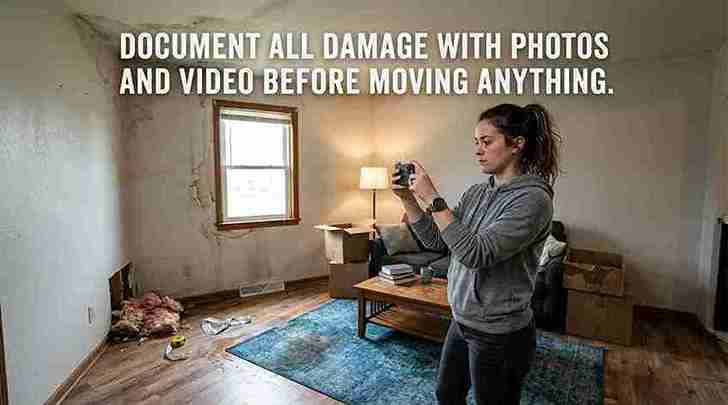
Document all damage with photos and video before moving anything.
What Causes Basement Flooding in Toronto?
Toronto's aging infrastructure and rapid population growth have created a perfect storm for basement flooding. Common causes include:
- Heavy rainfall overwhelm: Toronto's combined sewer system can't always handle intense summer storms, causing water to back up into basements through floor drains.
- Spring snowmelt: Rapid snowmelt saturates the ground faster than drainage can handle, pushing water toward foundations.
- Foundation cracks: Even hairline cracks in concrete foundations become entry points under hydrostatic pressure.
- Blocked or failing weeping tile: The drainage pipe around your foundation can become clogged with sediment, tree roots, or simply wear out over time.
- Sewer backup: Municipal sewer surcharges push wastewater backward through your home's floor drains and toilets.
- Burst or leaking pipes: Interior plumbing failures, especially during Toronto winters, can flood a basement in minutes.
Toronto's Most Flood-Vulnerable Neighbourhoods
Older neighbourhoods with mature tree canopies tend to have more aggressive root intrusion into sewer lines. Areas with older housing stock are also more likely to have original clay tile foundations susceptible to cracking. The FSA zones we serve including M5R (Annex/Casa Loma), M4M (Leslieville), M4L (East Beaches), and M6R (Parkdale) all have above-average basement flooding claims.
How Long Does Basement Flood Restoration Take?
The timeline depends heavily on the volume of water and how quickly professionals arrive. Here's a typical progression:
- Day 1–2: Emergency water extraction, initial drying equipment placement, contents removal
- Day 2–5: Active structural drying with industrial air movers and dehumidifiers
- Day 5–7: Moisture testing and monitoring to confirm dryness
- Week 2–4: Repairs drywall replacement, flooring, painting, rebuilding
The drying phase cannot be rushed. Cutting it short leads to concealed moisture that causes mould and structural degradation months later. Reputable restoration companies use moisture meters and thermal imaging to confirm complete dryness before closing walls.
Insurance: What to Know Before You Call Your Insurer
Do not call your insurer before you've documented the damage thoroughly. Once you file a claim, an adjuster will be assigned and their assessment of the damage determines your payout. Having professional documentation (which IntelliHomes provides) significantly improves outcomes.
Also note: most standard Ontario home insurance policies do not cover overland flooding or sewer backup unless you've specifically added these riders. If you haven't, you may still be covered for sudden and accidental water damage from internal sources (burst pipes, appliance failures).
Call IntelliHomes Now | 90-Minute Response in Toronto
If your basement is flooding right now, every minute matters. IntelliHomes Restoration responds to water emergencies across Toronto's M-zone FSAs and Oakville's L6 zones within 90 minutes, 24 hours a day, 7 days a week.
Call (437) 523-9015 now or submit a request online and we'll call you back within minutes.